Mass against resonance
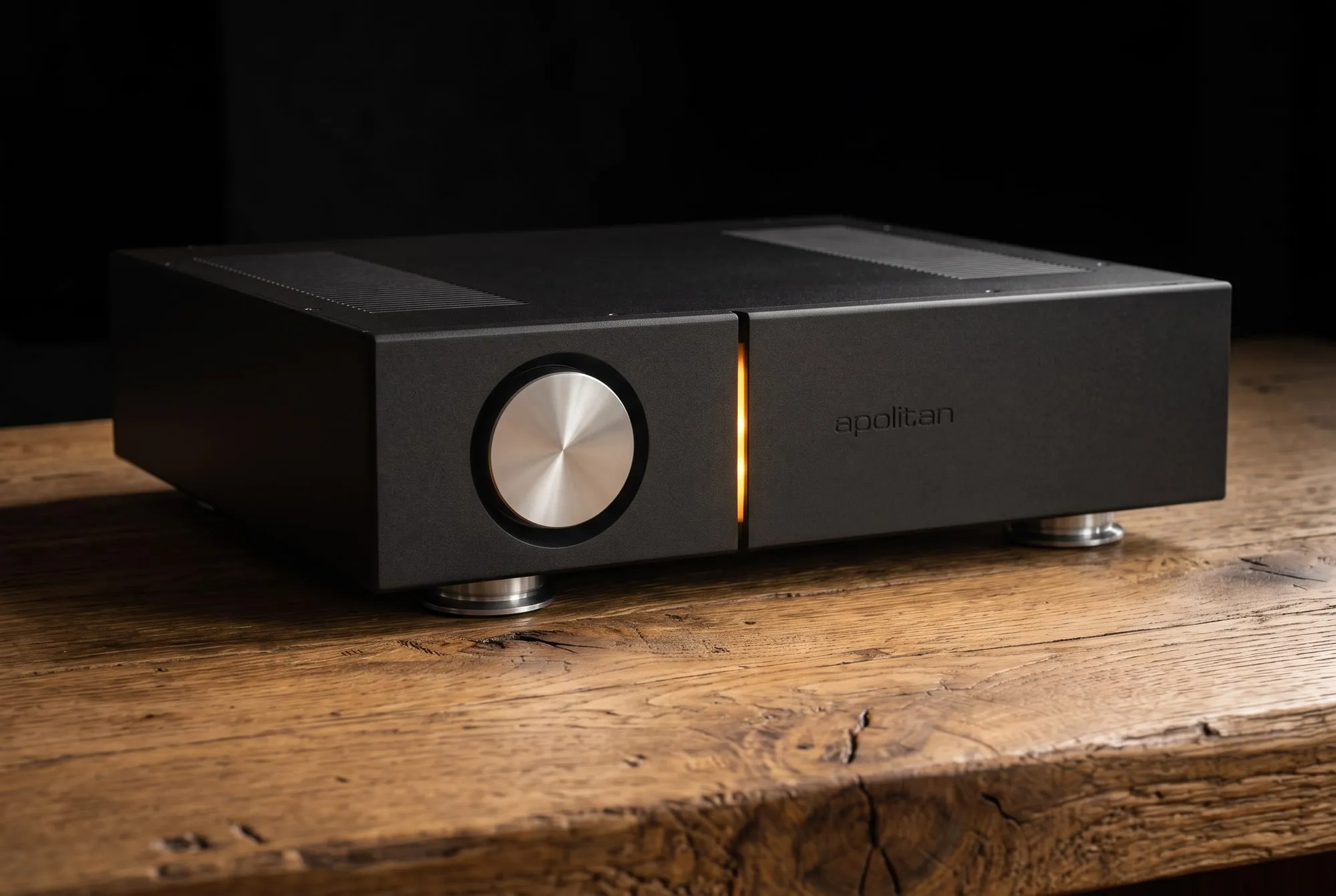
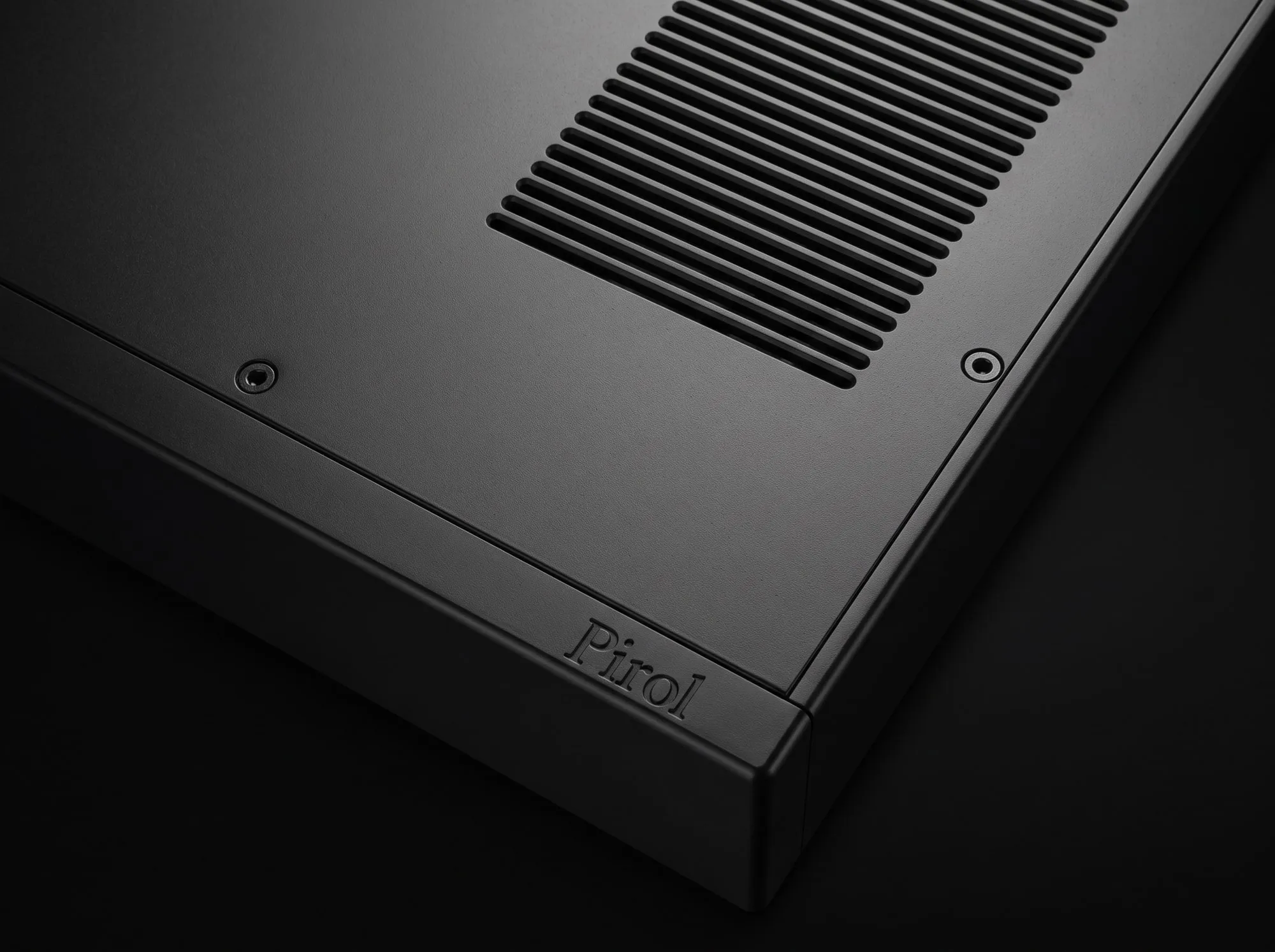
The chassis is entirely our own design. Top and bottom are 6 mm, the sides 12 mm, the back 10 mm and the front a solid 25 mm of aluminium to aerospace standard 6061. The different wall thicknesses break up chassis resonances, and micro-vibrations no longer reach the sensitive components. The sound gains calm and contour, the bass gains authority.
At just under 20 kg, the Pirol weighs twice as much as the Stereoplayer. It stands on elaborately decoupled stainless steel precision feet that isolate it from the surface below and keep structure-borne noise from the rack away. The control knob, too, is machined from solid stainless steel.
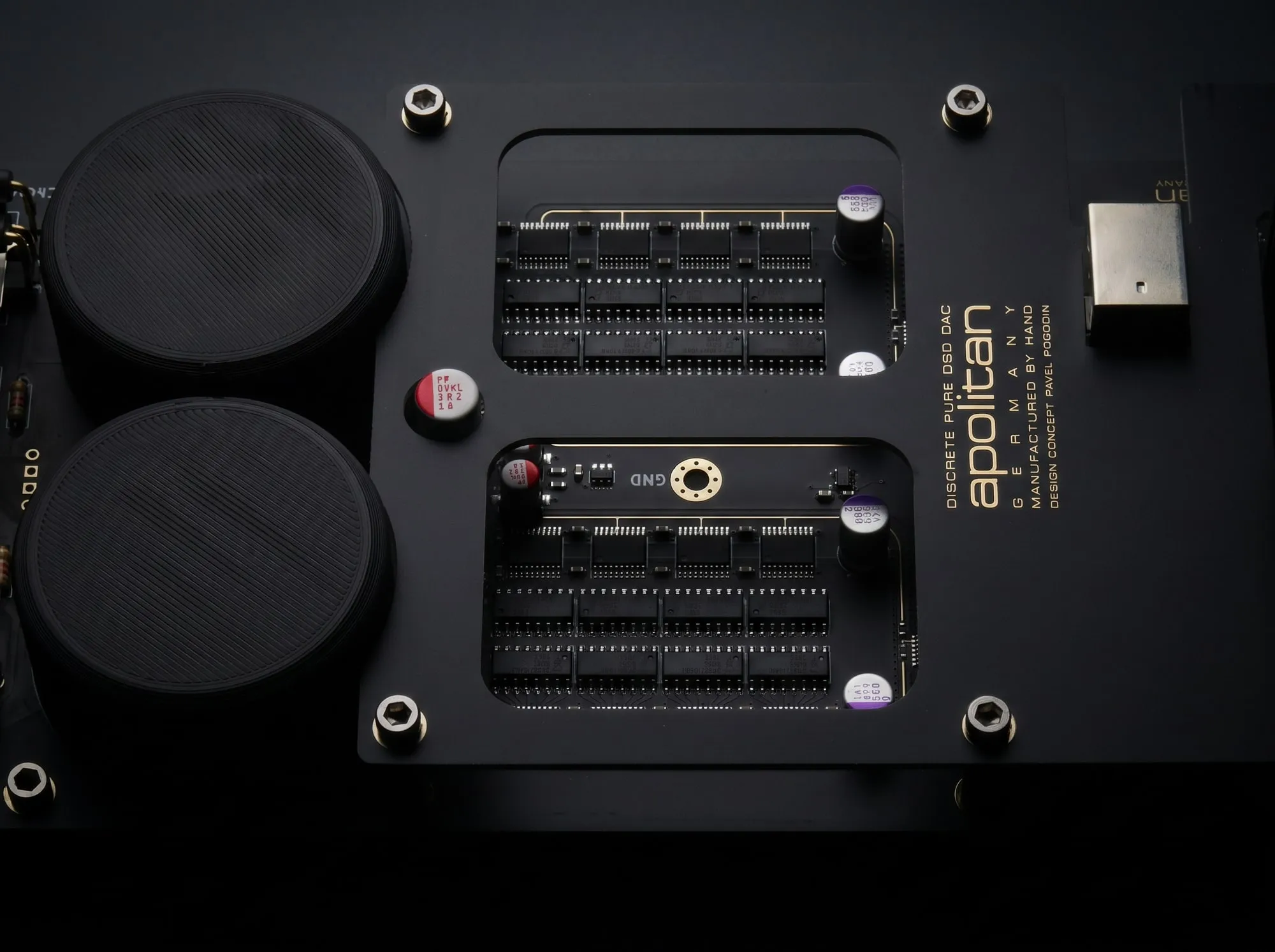
The DISCRETE PURE DSD DAC
Well over 90% of all D/A converters are built on off-the-shelf standard chips, for example from ESS Sabre or AKM. We deliberately chose a different path. Instead of competing over theoretical measurements, we focus on what matters when you listen: the analog authenticity and the dynamics of your music.
Nor is it a classic R2R DAC. R2R converters can sound more musical than modern standard chips, but they still work with PCM. Elaborate resistor ladders emulate multibit steps of 16 to 24 bits, and the weaknesses of PCM filtering remain.
Our converter is 100% discrete, with no DAC chip and no FPGA simulation, and it processes nothing but a pure 1-bit DSD data stream. Figuratively speaking, the circuit works like a precise analog slide rule: tightly toleranced individual components shape the signal, assembled by hand in Germany. There is neither firmware nor a DSP chip in the signal path.
No active output amplifier
Almost every conventional DAC needs an active output stage of op-amps or transistors, some even of tubes, after conversion to prepare the tiny currents and voltages for your system. These very components add colouration and noise to the signal, along with phase errors and distortion.
The Pirol does without this stage. A 1-bit DSD signal is essentially already a direct representation of the analog waveform. The analog signal is therefore available immediately after the discrete converter network and the passive filtering. Fewer components in the signal path mean more transparency and a calm background, and you hear it at once.
Why pure DSD
Almost all digital recordings are made in PCM. The signal is processed several times along the way: both recording and reconstruction require interpolation and decimation filters, in other words estimates.
DSD follows a more natural principle. Where 24-bit PCM knows 16,777,216 levels, DSD at a very high clock rate up to DSD512 knows only two states: the signal rises or it falls. Calculation and conversion errors are thus physically minimized.
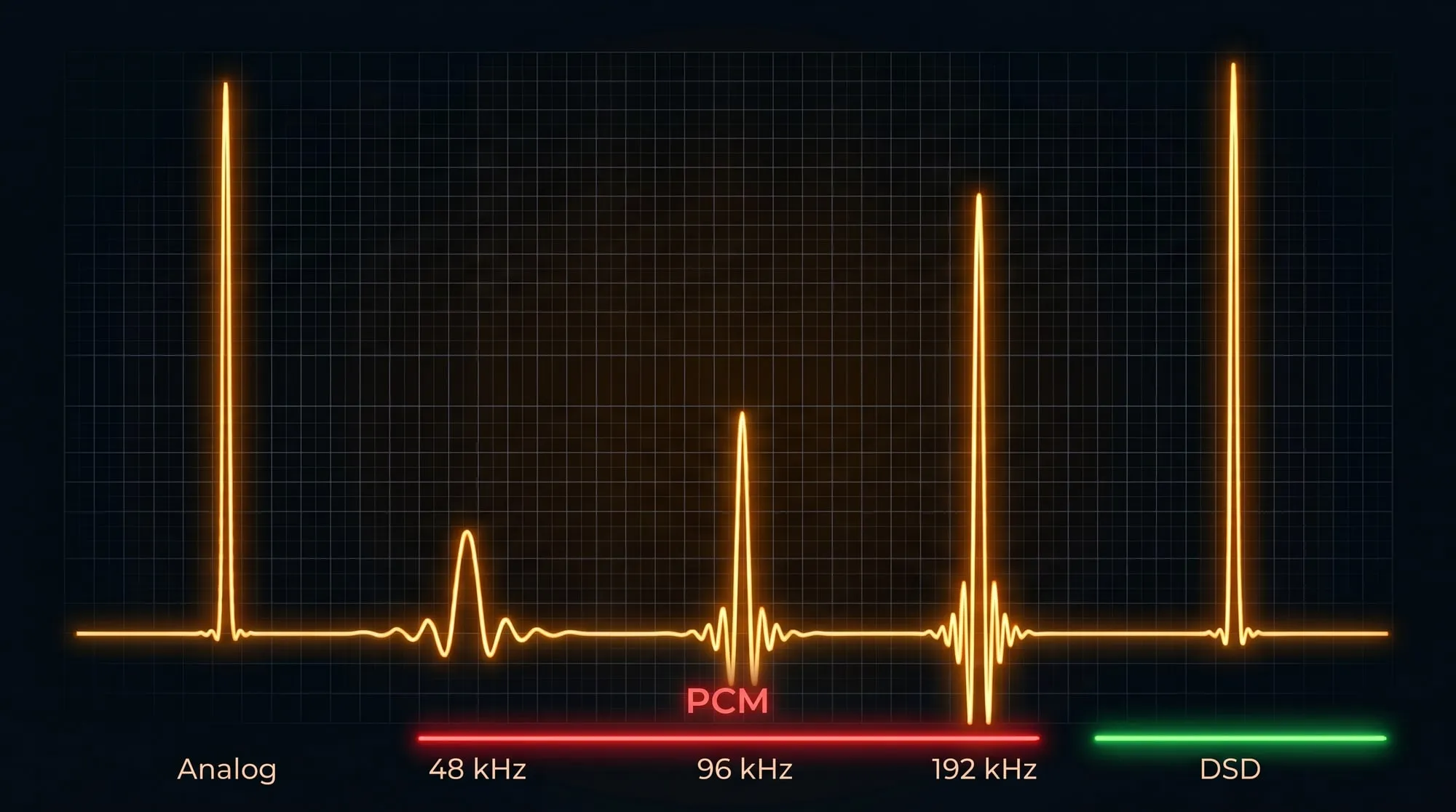
Your hearing relies above all on transients: the first stroke of the bow on a violin string or the hard impulse of a drumstick. PCM filters tend to produce unnatural pre- and post-ringing here. Pure DSD reproduces these impulses just like the analog original. It is no coincidence that DSD is regarded in the studio as "digital analog".
The diagram shows exactly this. On the far left is an analog impulse just a few microseconds long, and next to it, how the different conversion principles handle it. PCM widens the impulse and adds pre- and post-ringing, most strongly at 48 kHz, less at 192 kHz but still clearly visible. DSD reproduces it as short and clean as the original.
Modern noise shaping moves the inherent noise entirely into the inaudible high-frequency range. Within the audible range, that leaves room for dynamics and the finest resolution.
Pavel Pogodin and the DSC circuit
The DSC circuit was developed by digital specialist Pavel Pogodin. Exclusively for apolitan, he designed an evolved version: instead of a two-layer board, it sits on a four-layer board. This allows a better layout. Even more important are the targeted shielding areas that can be placed on individual layers. This improved the result noticeably once more.
Shortly before conversion, the audio signal is fully galvanically isolated, keeping interference and ground hum out. Immediately before conversion, an NDK precision crystal reclocks the signal and pushes jitter down to a minimum. 29 dedicated voltage regulators supply every section of the board cleanly and stably.
The DAC in a Faraday vault
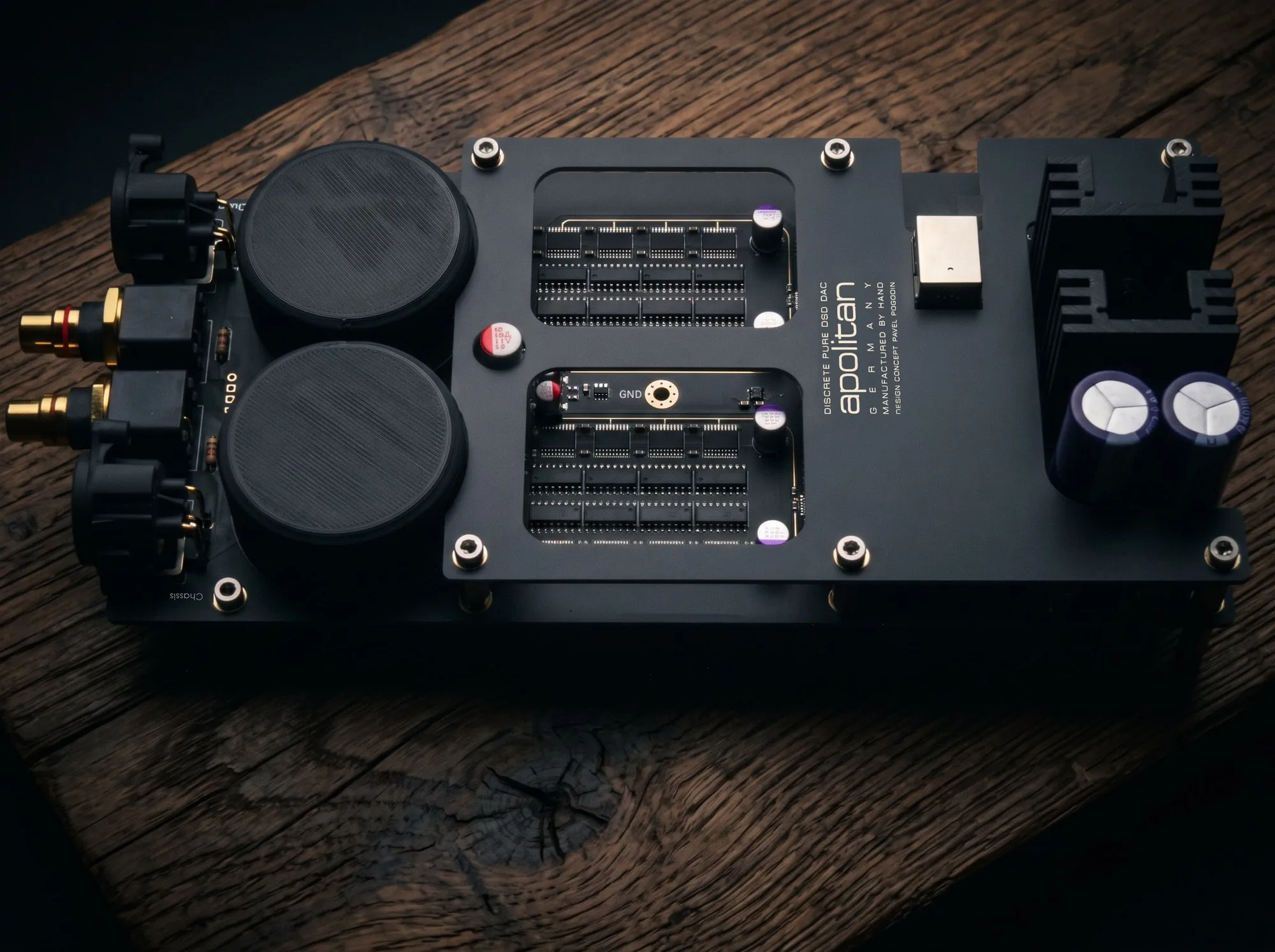
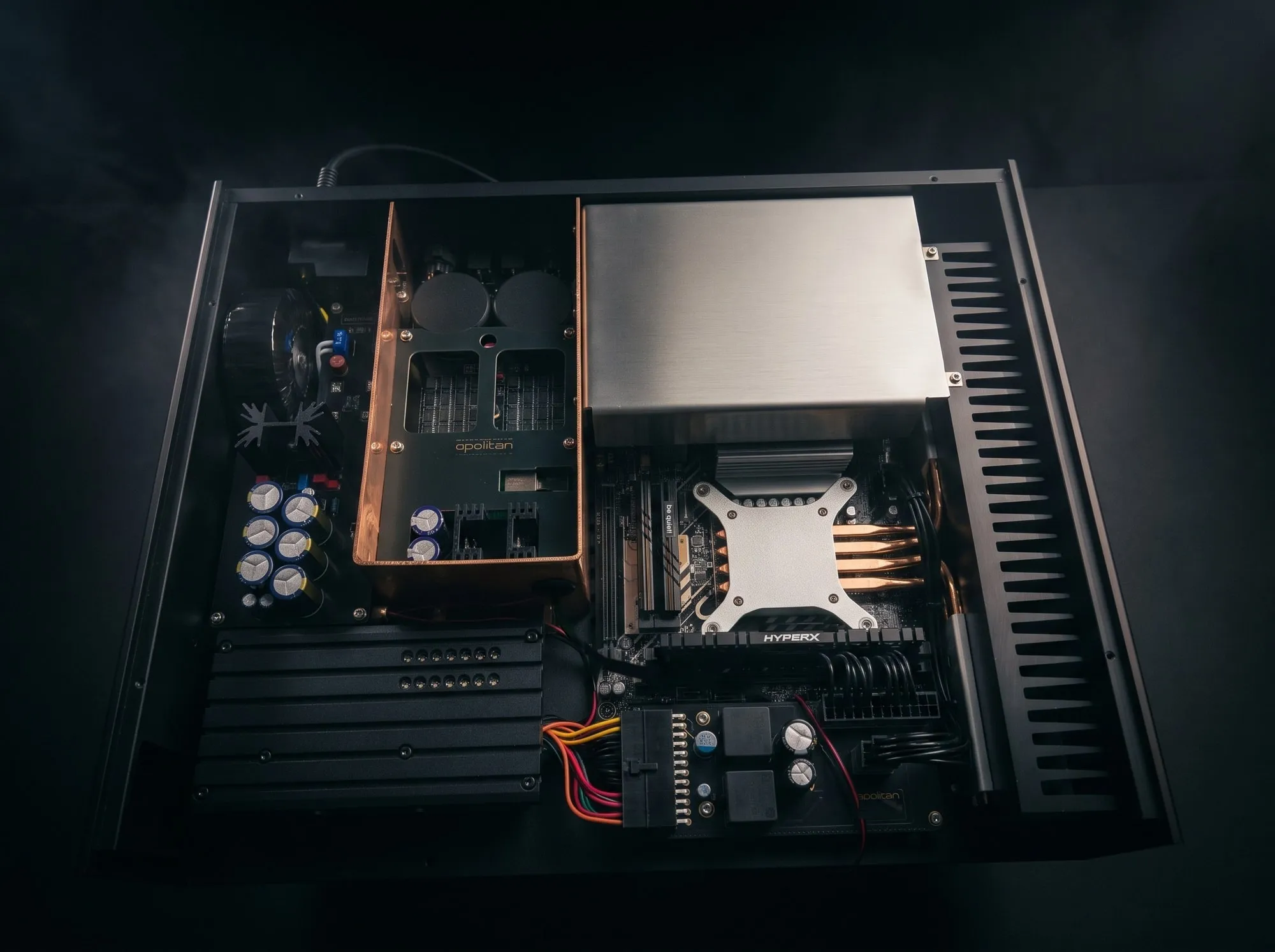
In the Stereoplayer, the DAC sat openly inside the chassis. In the Pirol it has its own vault of 2 mm stainless steel, fully lined inside and out with pure copper. This sandwich keeps high-frequency noise away just as it does alternating magnetic fields. You hear it as a deep black background and a vivid sense of depth.
The mainboard is shielded as well. Every unused slot carries a 2 mm stainless steel cover, so it cannot act as an antenna for stray radiation. The signal stays clean, and transients come through with more precision.
A full-scale server
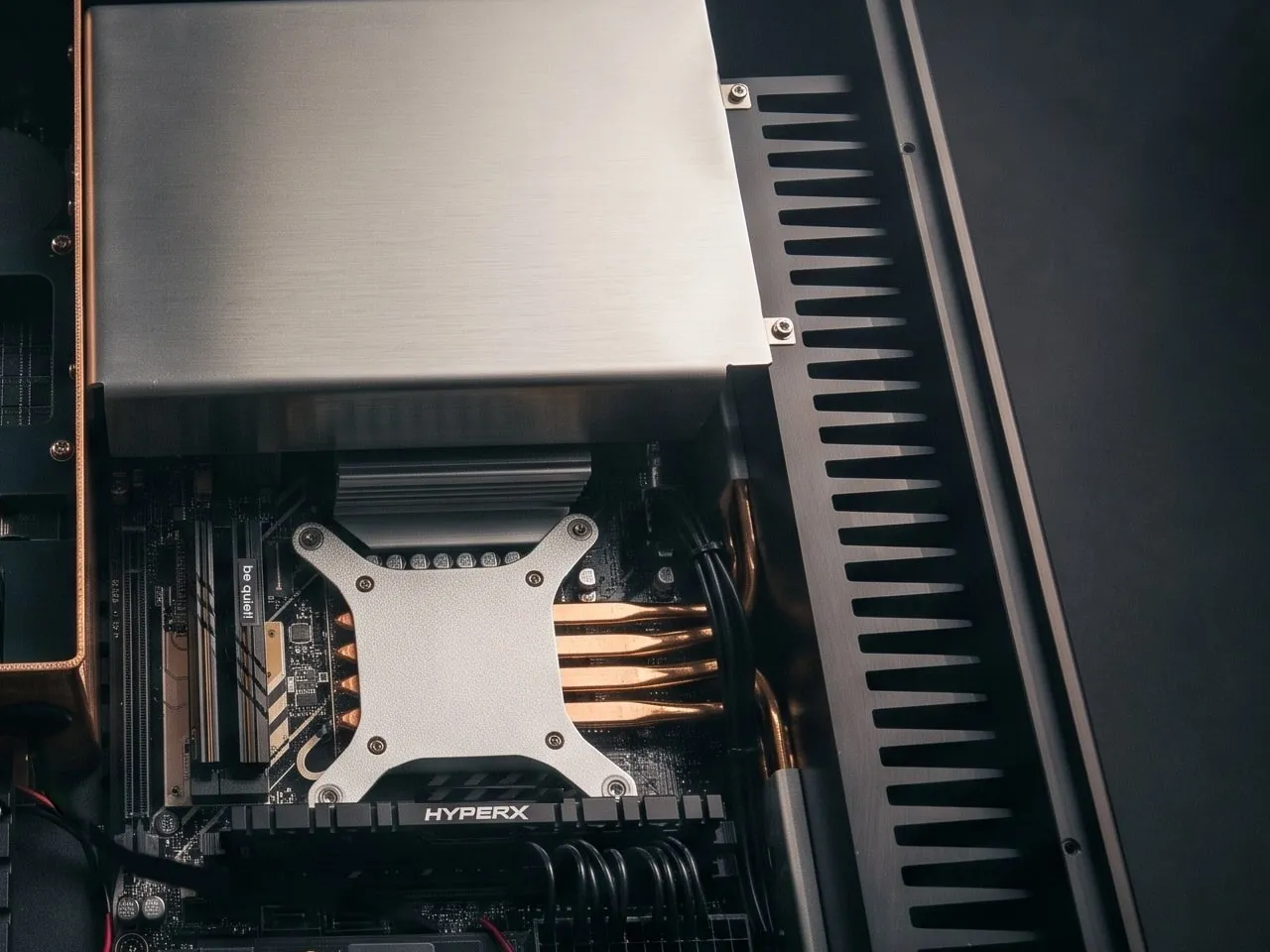
Many streamers rely on a mini PC, a NUC or even a Raspberry Pi. For streaming alone, that is enough. The Pirol runs on a full-size mainboard with a powerful Intel i7 processor, so it is ready for everything: upsampling, room correction via filter files and, not least, the DAC, which itself needs a lot of computing power for conversion to pure DSD.
We built the cooling to measure. It runs silently, at 0 sone.
Above all, the server is modular, built to international industry standards. Individual components can be swapped and upgraded. This keeps the Pirol up to date for many years.
Pure DSD meets computing power
Because the DAC accepts nothing but pure DSD, the server converts PCM sources precisely in real time. Using Roon and modern modulators such as 7th-order CLANS, your music library is turned into fine DSD streams up to DSD512.
Since the converter works without sound-bending internal filtering, it responds sensitively to your choice of reconstruction filter, linear phase or minimum phase. This lets you tune the system to your listening room and your personal taste.
The DISCRETE PURE DSD DAC is not a mass product. It does without everything that stands in the music's way, from the standard chip to the output amplifier. It is a tool for everyone who wants to feel the intimacy and energy of a real live performance. Hear your music the way it was meant to be heard.
Two power supplies, two tasks
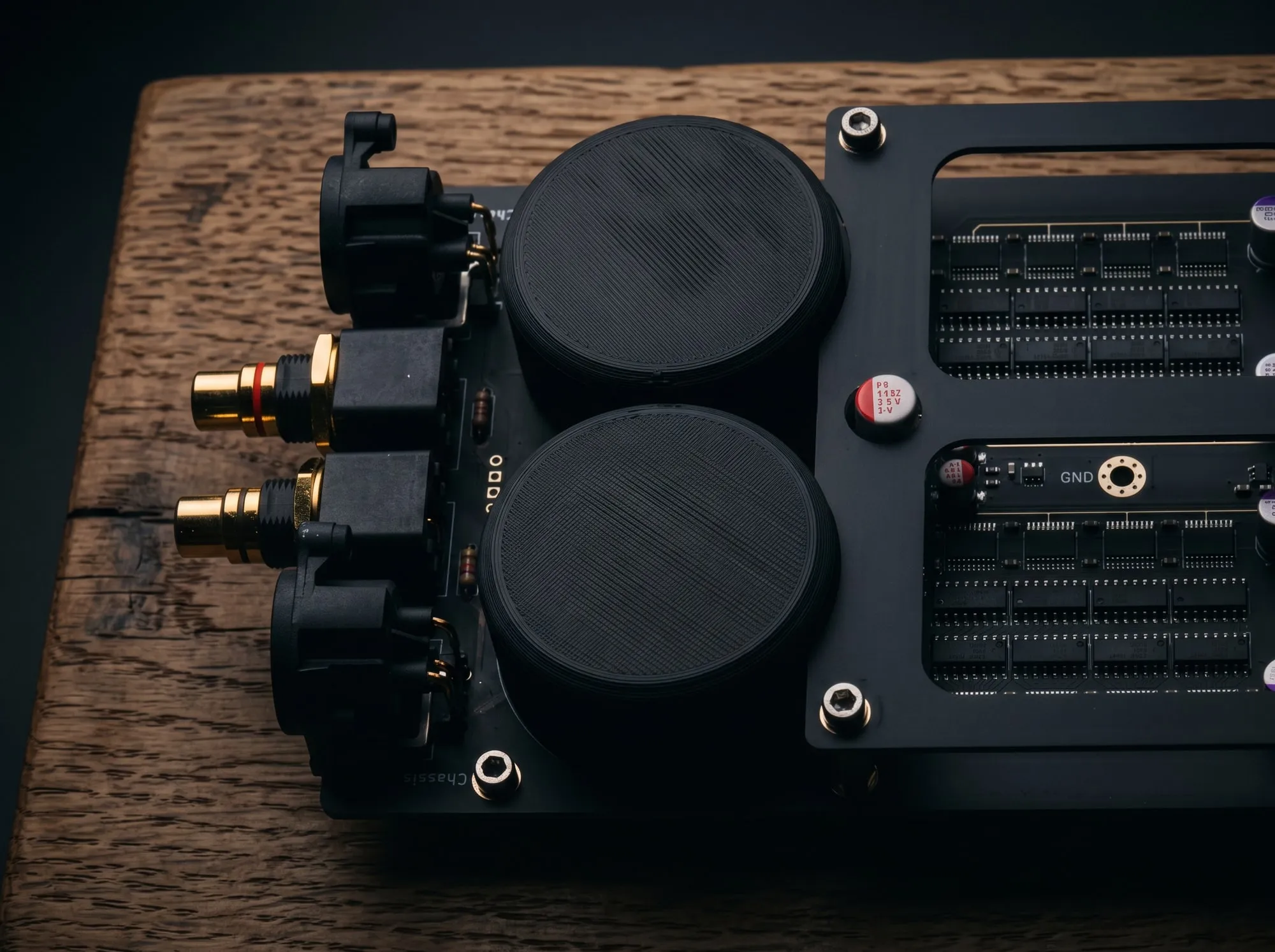
The analog section is fed by a custom audio-grade toroidal transformer with a minimized stray field. It sits as far from the DAC board as possible. This clearly reduces 50 Hz hum and induced eddy currents. The finest reverb tails and decays are preserved.
Unlike in the Stereoplayer, the analog power supply is a true linear supply with a high-precision linear regulator and generous filtering. What you see inside the device is only half the story: beneath this board sits a second one of the same size. It carries an EMI filter circuit and a DC filter that intercept interference and DC components from the mains before they reach the power supply.
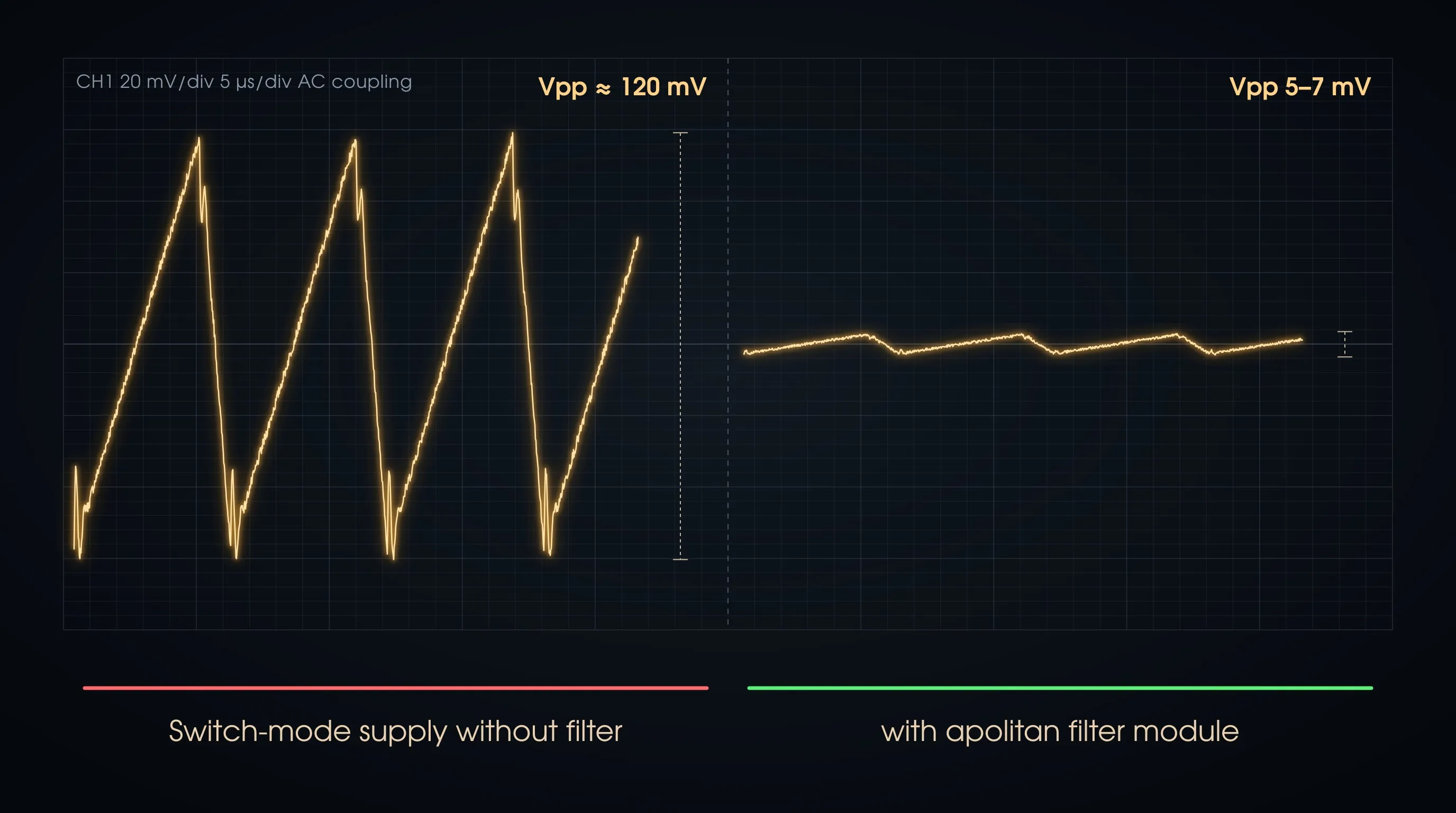
For the digital section we use a fully enclosed switch-mode supply followed by a dedicated filter board. In the Stereoplayer, residual ripple was a typical 120 mV; in the Pirol it is 5 to 7 mV. The graphic illustrates the difference on the same scale. That is power on the level of very good linear supplies, with the impulse speed of a switch-mode design. The treble sounds silky and stays free of fatigue even over long listening sessions.
Connections
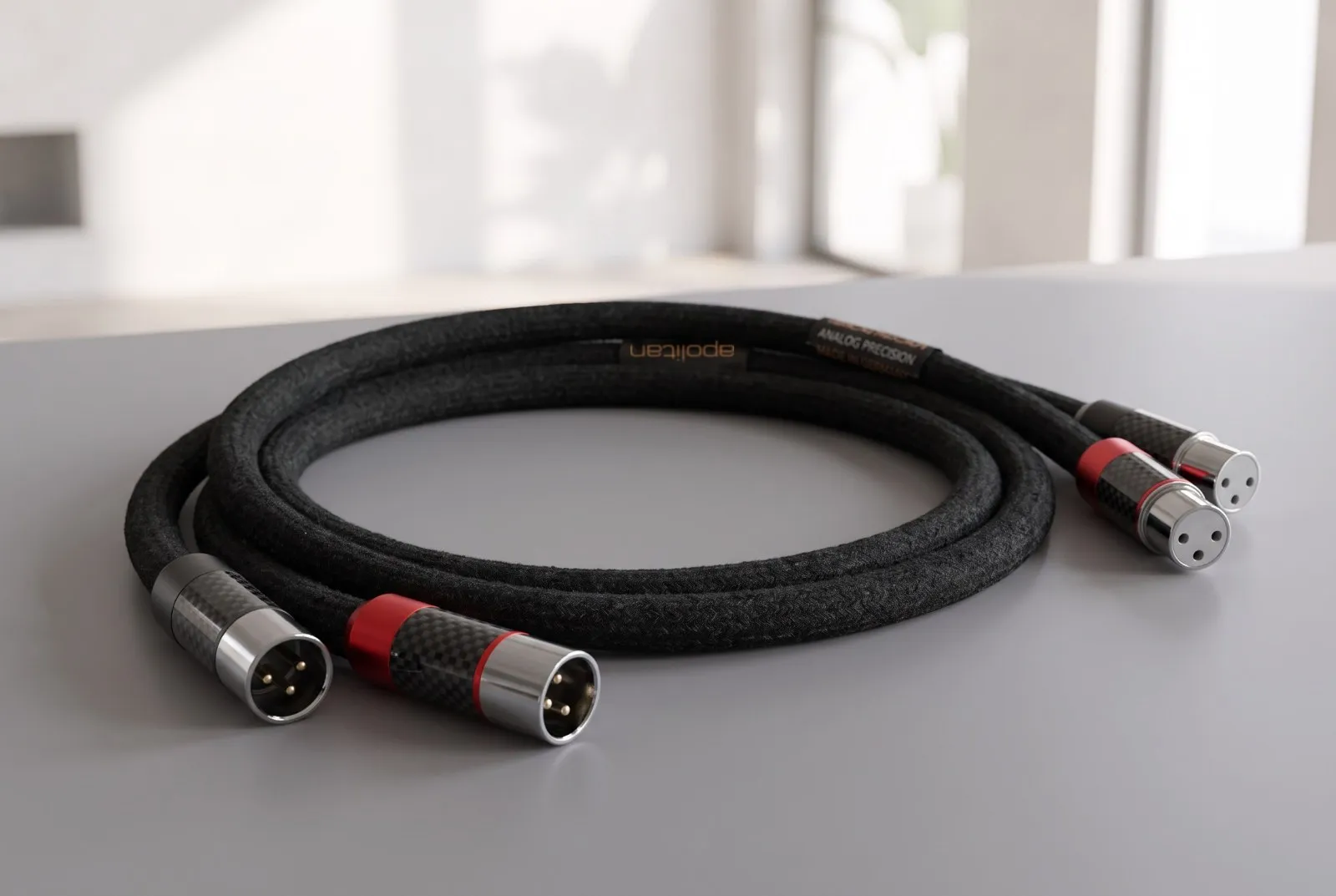
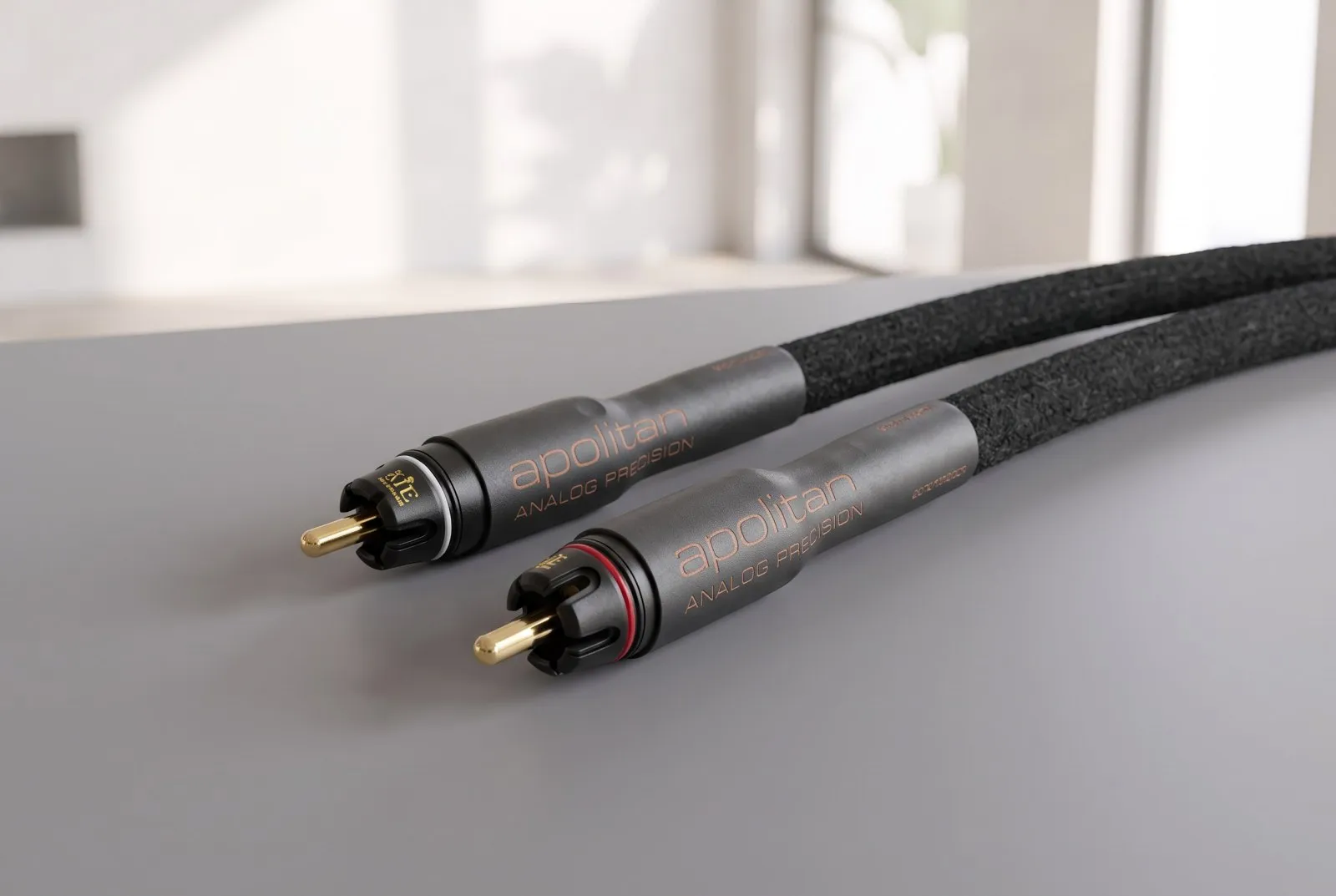
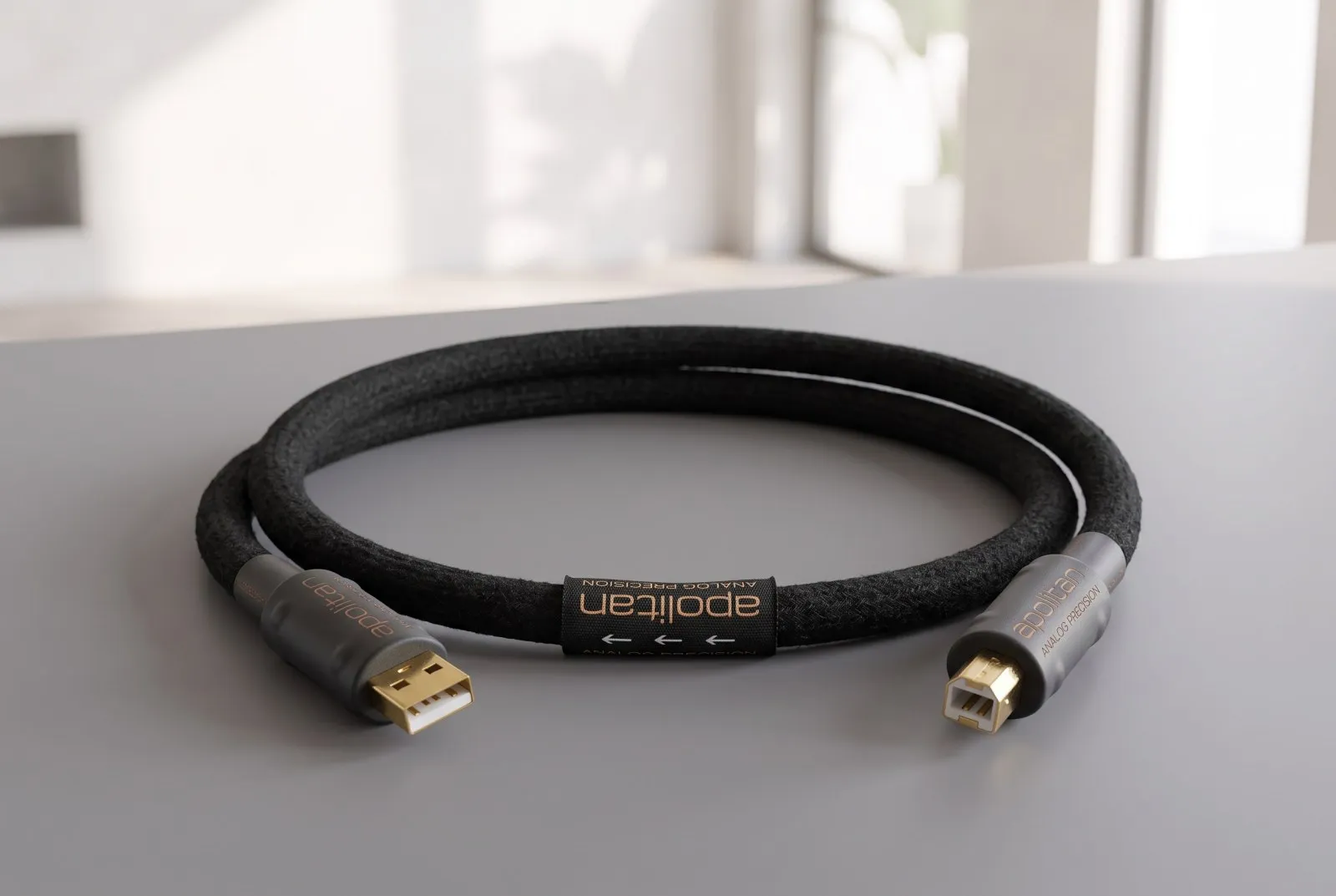
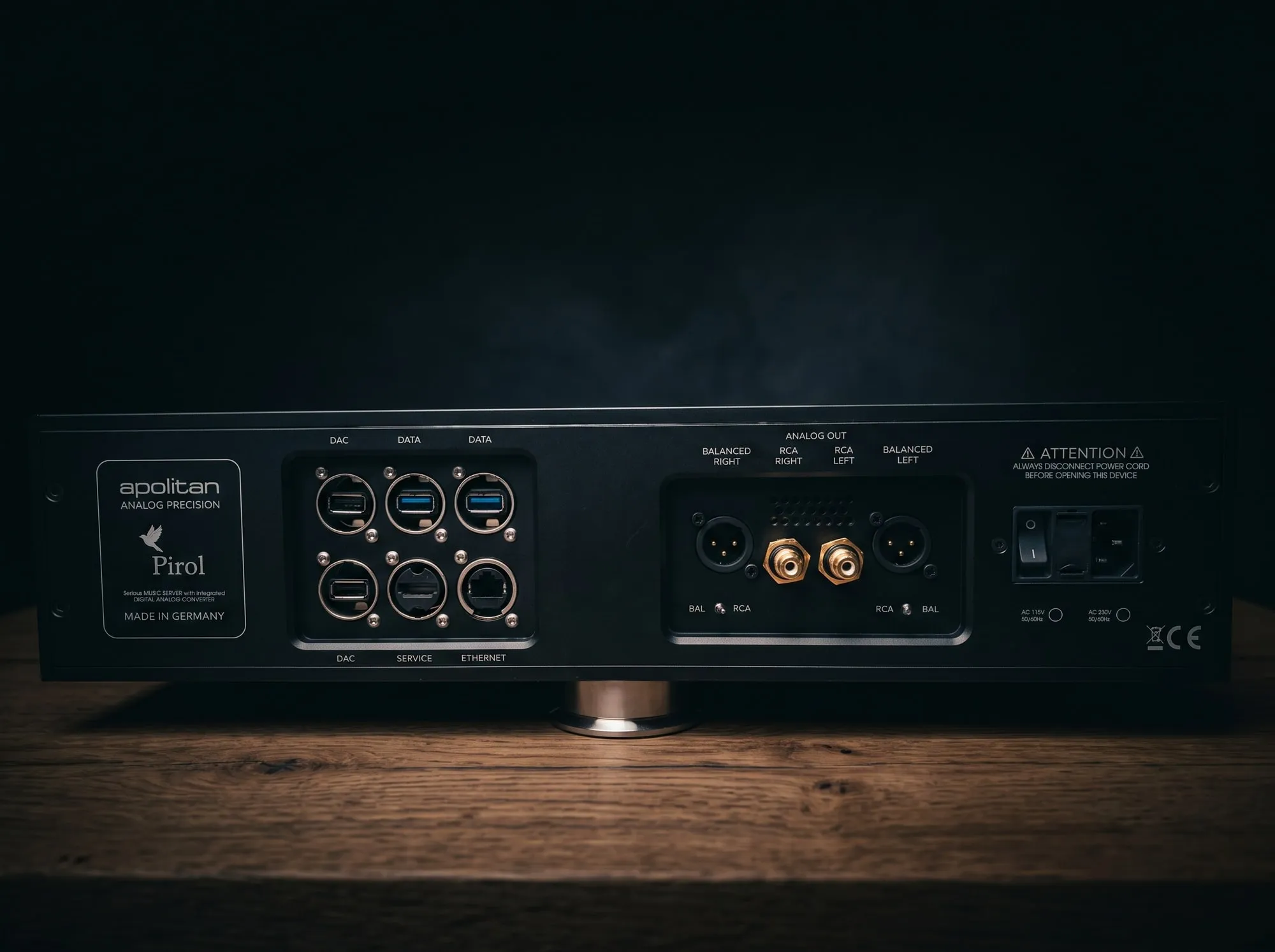
On the analog side, the Pirol outputs its signal balanced via XLR or via RCA, selectable per channel with a switch. Two USB 3.0 ports are available for data. In addition there is Ethernet, two USB ports for the DAC and a service connection.
Dimensions
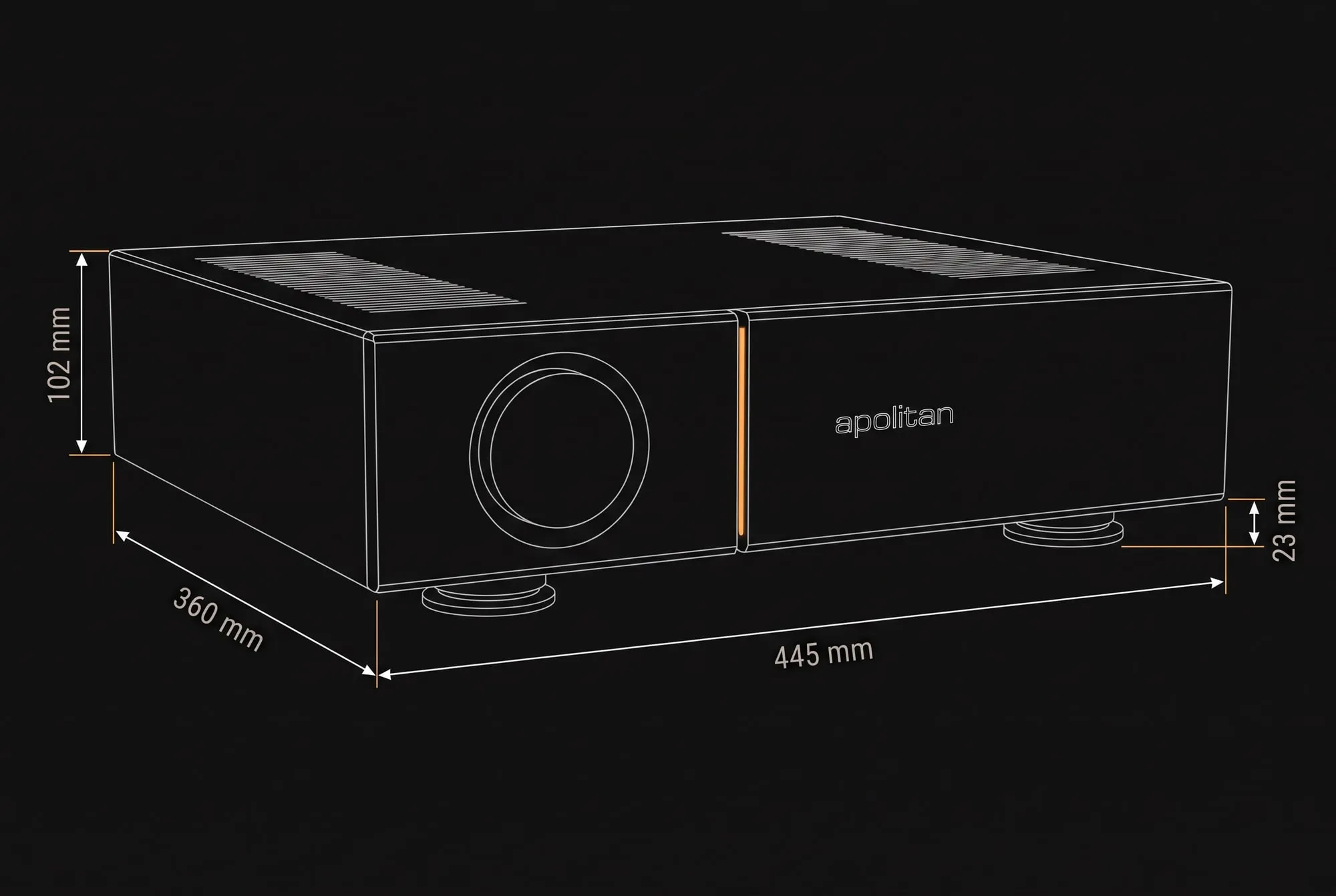
The Pirol is 445 mm wide, 360 mm deep and 102 mm high. The feet add another 23 mm, for a total height of 125 mm.